"An
Irish writer's first duty to his country
is to attack it."
- J.M. Synge
"The climate of Northern Ireland ... is such as to encourage weakness of character."
- Brian Moore
THE HONEST ULSTERMAN
(with
acknowledgement to
Edward Lear)
How daunting to know Mr Weir
who pisses in garden and sink.
People think he is cranky & queer -
and he no longer cares what they think.
He lives without television,
and showers every fifty weeks.
The ambitious he views with derision
and Normals as dangerous freaks.
Two persimmon-trees grew in his orchard.
He bakes bread, makes yogurt and curds.
He can't bear to think of beasts tortured,
and is bad at mincing his words.
He never had any ambition
except to be quiet and free.
He has long enjoyed this condition
and for long has been learning to be.
His favourite music is raga
(though silence is what he likes best),
his favourite book is Njál's Saga.
His life is a quest-palimpsest.
He once went to live with the Pygmies
but just couldn't cope with the heat.
He flirts with some social stigmas
and was sent to gaol as a treat.
He's impulsive (as well as transparent)
and loves to be left on his own.
He makes his dislikes too apparent,
and has half a wish to be known.
He has a long beard & short fingers,
thin body and spathulate thumbs.
He longed to be one of the singers
and failed to be one of the dumbs.
He's pretty ashamed to be human
and looks forward to being dead.
He sometimes cooks spinach with cumin
and is happiest going to bed.
The joys of his life have been doggy.
Though dogless for many a year,
he now is contentedly foggy.
It's best not to know Mr Weir!
"Would
you please reinvest in a Irish domain name ending in .ie and
stop using .org.uk.
More than half the planet thinks that Ireland is part of the UK. Sites
like yours don't help.
Seán"
(no other information given)
An .ie domain is available only to people with addresses in the Irish Republic.

|
The North, though hardly democratic before the 1970s, was protected by 'British interference' from this feudal state of affairs. The violence which erupted after the Bloody Sunday shootings and lasted 30 years pales into insignificance compared with the systematic cruelty of many - if not most - Christian Brothers and Magdalene Sisters, and an unknown proportion of the clergy, some of whom rose to high office not just in Ireland, but in the Vatican. The successive governments of the Irish Free State and Republic completely failed their people. We can be sure that only 'the tip of the iceberg' has been revealed. But no-one who has read (for example) John McGahern's memoirs will be too surprised. Children brought up in violence pass on violence to their own. It is, therefore, not surprising that American police forces came into disrepute because of their high proportion of Irish night-stick-wielding officers. Indeed, we now know that Irish emigration was as much a flight from Irish cruelty as from the Irish Governments' (continuing) economic ineptitude. My strictures on the character of Ulster people (below) should, therefore, be seen within the larger Irish context.
|
RAGING WITH FLAGS
a note about Northern Ireland
"great hate, little room"
In 1570 the Queen of England's Principal Secretary, Sir Thomas Smith, wrote of the recently subdued Ulster:
"[it is] a rich and pleasant
country...
inhabited with a wicked, barbarous and uncivil people."
The environmental degradation of the six counties of Northern Ireland is probably not worse than in the rest of Ireland - whose 'forty shades of green' are as spurious as most of Irish history. The whole island's fields come in two shades - chemical green and overgrazed green. But Northern Ireland's notoriety does not derive from the contempt its people have for Nature, the landscape and environment, but from the evident distrust its people have for each other. The local enunciation of the statelet as Norn Iron (with pronounced - but not rolled - Rs) nicely conveys the clenched teeth of its inhabitants.
Northern Ireland is the only part of Europe west of Ukraine and Kaliningrad to have had government by the same political party for more than 35 years - in fact, for 50 years. It was almost a police state. Local government was slightly more plural, but it was the lamentably discriminatory behaviour of district councils which precipitated the Civil Rights movement in the nineteen-sixties, and, in turn, the over-reaction by the government in Belfast. The subsequent arrival of the British Army to defend Roman Catholic populations in deprived areas soon resulted in the formation of the Provisional IRA, a terrorist organisation enthusiastically backed by many in the USA.
The people may not really be worse than others in the world, not worse than the characters in Balzac, Zola, Céline or Genet, but their off-handedness, their arrogant ignorance, utter lack of courtesy, charm and sense of ceremony removes any possibility of gaiety - or, for that matter, seriousness.
The distrust is not just a matter of religion. Almost all Northern Irish people distrust almost all other Northern Irish people. They hate excellence in others, and fear any kind of originality. To "put your head above the parapet" is to invite envy, ostracism or worse. You will rarely hear one Northern Irish person praise or admire another one - unless there's a sting in the tail. Thus all creative people leave Northern Ireland with the non-stop hæmorrhage of sensibility and talent which has continued since 1919 at least.
Those who are left must conform to the uneasy blandness born of a kind of low-level autism which attracts the least local attention. Everything in Northern Ireland is, of course, low-level, from violence to Radio Ulster.
As "Scotch-Irish" my people emigrated to America in the 18th and 19th centuries - over a quarter of a million in the 18th century alone - to become on the one hand racist inhabitants of the South and West, on the other, the 'rednecks' and 'crackers' who formed a porous buffer between the Amerindians and the steadily-advancing, regimenting United States.
It can be dangerous to employ constructive criticism or make unfavourable external comparison in Northern Ireland (which I prefer to call 'Sordid Ireland') because every little critical observation becomes a casus belli for this drab and charmless, combative - yet also bizarrely smug - population, or at least an opportunity for grievance, truculence and sulk.
The politics of Northern Ireland are unique in consisting entirely of slogans. It is thought by some that this word, slogan, derives from Irish or Scots Gaelic for a summoning to battle, a call to arms or a war-cry - from the Irish word slúagh, meaning host, multitude - or flock of sheep over 500 head. The derivation seems a little forced, not to say back-to-front - but then almost everything in Northern Ireland is forced - or repressed - and back-to-front...
The endemic mutual distrust means also that Northern Irish people touch each other even less than the English. They do not shake hands, except, awkwardly, at the first meeting with a stranger. The visitor may notice the little semi-autistic concentration-camps of Don't-Touch-Me territory that Northern Irish people carry round with them. This requires a great effort - as do the inculcated truculence and resentment that are so near the surface of most of the population. Thus they haven't the energy to look outwards to the wide world from which they have isolated themselves, but are constantly, simmeringly looking inward all the time, obsessed with money and goods and the most vulgar definition of success. For them, success can really only be a function of conformity within the bleak little sub-cultural bubble that is north-eastern Ireland.
Like all Irish people, they are very good at complaining about their predicament and in making sure that it is trumpeted abroad. Thus a very low-level, low-intensity communal conflict which has claimed fewer than 4,000 lives since 1968 continually grabs world headlines, while in other, more pleasant parts of the world, millions die without any comment. Two million people died, almost unreported, in Congo-Zaïre in the year 2000, while appalling civil wars have been raging in both Colombia and Sudan for the past 30 years. One of the more vicious European wars - that claimed hundreds of thousands of victims - was prosecuted in Chechenya, while in Afghanistan... Gypsies are being hounded in many countries of Europe, while the US-financed Turkish genocide of Kurds has gone on unreported since 1947. It is a crime in Turkey to speak Kurdish or play Kurdish music. But European newspapers continued to report ad nauseam the very minor 'conflict' in Northern Ireland - where I have managed to live for 25 years without ever locking my house.
It is instructive to compare Northern Ireland with Southwest France - where religious wars went on for nearly 200 years, and came hard on the heels of the Hundred Years' War. Montauban was a great Protestant citadel until Louis XIV's attrition. In this area of France, religion is largely an irrelevance, and people are astonishingly friendly, easygoing and tolerant, especially in those towns which were Huguenot strongholds.
What Northern Ireland sorely needs, of course, is an input from exotic immigrants to its anti-convivial society. Britain became a less stifling place to live as a result of post-war immigration not just from the Indian sub-continent and West Indies, but from Greece and Cyprus, Spain and Portugal, Hungary and Czechoslovakia. None of these groups ever percolated to Northern Ireland - where my black-bearded friend has had Dirty Jew! shouted at him. Thing improved slightly in the first eight years of this century, when some Poles, Lithuanians, Kurds and Romanians somehow managed to establish themselves briefly. But the Romanians, who were Roma, had their homes burned down.
When I went to tiny Albania in 1994, 'the poorest country in Europe', with ethnic divisions and virtually no modern 'infrastructure', I thought it compared very favourably with Ireland. The food was edible, for a start (okra, beans, tomatoes, peppers). Almost every family distilled its own raki, from grapes or plums, some of it of a quality that any French maker of alcool blanc would envy. People were very friendly and curious. I was enthusiastically directed or taken to places that interested me. I could get by very well with a mixture of Italian, German and French as well as English and a few words of Albanian - aided by Albanian curiosity and desire to help a stranger.
God help the Balkan tourist who comes to monoglot (and sometimes incomprehensible) Northern Ireland, whose only other language is an unprettily-pronounced and politically-learned version of Irish. There have been reliable reports of 'exotic' tourists being jeered at in Derry and Belfast. Goodwill is almost unknown here, as indeed is good faith.
Indeed Ireland, historically the pre-eminent country of emigration, has an appalling record since independence in 1922 of refusing refugees and treating the few that arrived almost as badly as the Christian Brothers and Sisters of Mercy treated the children in their charge.
It seems that almost nobody does anything in Northern Ireland for love. It is a loveless statelet obsessed by rules and rights and procedures - and, of course, violent protest against the rules and procedures. Obsessed, too, by money - which seems to be the only reason (apart from anger) why anyone does anything. Third-rate paintings here are twice as expensive as third-rate paintings in the USA. Art is business, never originality. Everything is quantity, never quality. Especially in the treatment of animals. The Irish are notoriously cruel to dogs, donkeys and horses - indeed it has the highest per capita destruction-rate for abandoned and maltreated dogs in Europe: over 23,000 a year. Northern Ireland (with about one-thirtieth of the UK population) accounts for one-third of the United Kingdom total of dumped and neglected dogs euthanised by SPCA organisations.
The lack of artistic awareness and emotional sensibility is as striking as Northern Ireland's anti-intellectualism and lack of self-awareness. People here simply do not know how ignorant of the world they are, how culturally backward compared with the average Albanian, Romanian, Bulgarian or Kurdish villager. The endemic truculence breeds arrogance - and compassionate understanding of anything is rare.
Few Celtic attitudes survived the onslaught of 'Christianity': reverence for trees, landscape, water, and dogs disappeared in Ireland long ago. Now the Irish as a whole are in the heartless forefront of the "anglosphere" of consumerist alienation that is so aggressively taking over the world. Whereas in large parts of France actual love of the landscape and desire to cherish it are almost palpable, one feels in Ireland that the land and landscape are regarded as enemies to be subdued - or, like one's neighbours, to be bested.
Because of the mutual distrust and miasma of animus there are no such facilities in Northern Ireland as the Village Halls found in much of Europe. The bars (very few could be called pubs) merely cater to the alcohol problem that is common to all Northern European and Celtic Fringe cultures. There are, of course, no European café-bars or plazas where people can freely socialise. Streets are just places to dump litter and escape from. So there is no way for people to meet outside religion or minority-interests such as birdwatching or philately. Friendship itself is a very narrow experience here, because there are so many no-go topics, and abrasiveness (which Northern Irish people call 'being down-to-earth') is the main social glue. Friendship is generally a matter of usefulness, a kind of tool. Violence lurks in the ubiquitous sarcasm and cutting remarks that rarely-praised children are subject to.
Here in Northern Ireland I am have been rendered ineluctably an Outsider, almost an Untouchable. A non-heterosexual wine-drinking, vegetarian philosopher-poet necessarily living in rural seclusion as a hermit, I have few friends - not least because there are so few people here who are not depressing. On the other hand, I, happily-shunned Outsider, never in 25 years locked my house, and rarely locked my car. Which is why I was able to stay here, unable to close my eyes to the squalor, but successfully avoiding the other human inhabitants.
Ulster people often combine the bloody-mindedness of the English and the mean-mindedness of the Scots with the whining intemperance of the Irish. Joie-de-vivre, communality, public spirit, sense of fun and public enjoyment, private encouragement and expression of affection are as rare as hens' teeth. But I am a witness, as I believe it is important to be. A witness to the oozing brain-disease that is called Normality and has taken an extreme form in the fatherland of rednecks. And, in this short essay, a witness to the petty squalor of Northern Ireland, where minds and palates are like the farms - littered with old junk, fertiliser-bags, rubbish-tips, neglected or tortured dogs, over-grazed fields, cattle-squelched quagmires, and bleak stretches of concrete that are a feature of the whole island of Ireland.
The social situation of Northern Ireland is neatly encapsulated by the (September-2001) attempts (even as far as bomb-throwing) by Protestants in a ghetto to prevent Catholic children walking through the area to their self-segregated school. (Most schools in Northern Ireland are segregated according to religious background.) It was such a simple and basic matter which started the Unrest Industry in 1968 when peaceful supporters of Civil Rights for Catholics were ambushed with the encouraging connivance of the police on a walk from Belfast to Derry. In 2001 the Catholic children were protected by a living wall of police and British soldiers.
Northern Ireland could be described as the richest and least colourful Balkan state - less than one-third the size of Albania: less than 150 km square, in fact, and containing the largest and least beautiful lake west of the Alps. Unlike even Albania, however, it is incapable of governing itself. It has 108 highly-paid Assembly Members and over a dozen political parties - but no Assembly. Some of these collect their stipend for this sinecure as well as fat salaries and expenses for being Westmister Members of Parliament and Members of the European Parliament. They may also be local councillors and well-paid non-executive directors of companies, so they are probably the wealthiest legally-wealthy politicians in Western Europe. In all the elections that seem to be the only fun beyond alcohol in Ulster not one canvasser or representative of any of the mindnumbing parties has ever come up my lane.
The famous Dr Paisley's party invented a language (spoken by no-one) called "Ulster Scots" so as to get Minority Language funds from the European Union. He did this to keep up with Sinn Féin (the quasi-democratic wing of the I.R.A.) which had claimed Irish as a minority language in the Six Counties. Irish is the official language in the Twenty-Six Counties, though scandalously few people speak it.
Most of Northern Ireland's inhabitants are either employed by its gargantuan Public Sector - or are in receipt of benefits from the same - or both.
As for the Republic: lest you imagine that it is really more cosmopolitan and less parochial than the North, let me say that two trained female archæologists refused to review the CD-ROM of this site for the prestigious Dublin-based journal Archæology Ireland - on grounds of obscenity! Litter is as big a problem for county Dublin as it is for county Down. And racist attacks and killings have occurred both sides of the Border. And far more environmental damage occurred in the Republic - especially during the brief rampage of the 'Celtic Tiger'.
But, ignoring the bungaloid homes and the roadside squalor (even in remote spots), it has to be said that there are few power-cuts and there is a magnificent library service (with free computers, invaluable to homesick Poles, Lithuanians, Afghans and other recent minorities) in Northern Ireland at least - where people generally leave you alone in a place where it is best to be a stranger amongst strangers.
But for the cramped in spirit, of course, Ireland is no straitjacket...
It is a charming irony that narrow, religious Ulsterman C.S. Lewis (who attended the same mind-shrinking school as myself) gave a Latinised version of Norniron to his fantastical land of Narnia, whose topography closely resembled that of counties Antrim and Down on either side of Belfast.
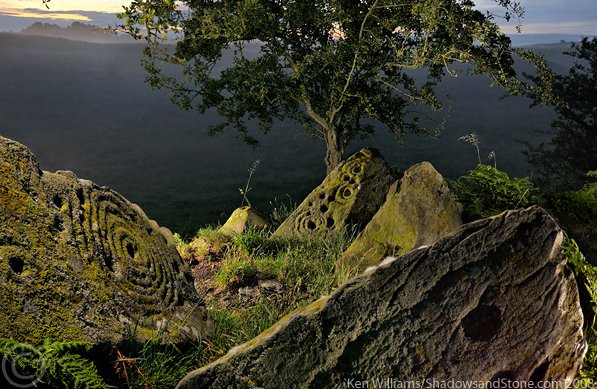
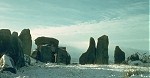
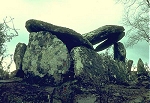
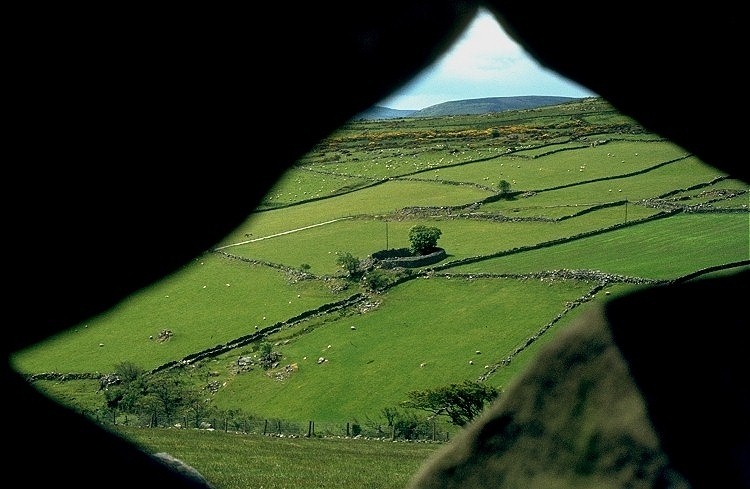
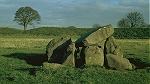
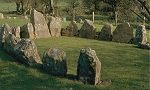
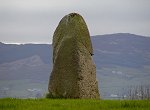
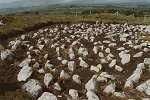
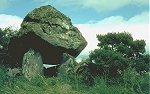
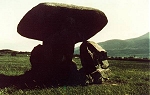
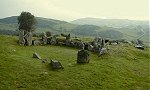
Perhaps the only good non-anthropological reason to visit Ireland is to experience the wealth of splendid megaliths often in denuded, but dramatic - or degraded, but silent - landscapes...
...where there are no mass graves...
November 2008
An enlightening Russo-Ukrainian view on Ireland.
For six years now no cuckoos have called.
|
FEEDBACK |
Dear Anthony,
Your essay on Northern Ireland hit a sore place in me because I have family here and know precisely of what you speak, and it's everywhere in Ireland.
The bitter reticence, competitiveness, one-upmanship and silent white noise of constant judgment that I feel coming from people here in Ireland, far more than in the US, is very painful to me.
- Allie Carter, July 2008.
Hello Anthony.
Your assessment of Northern Irish people is as accurate a study of the regional character as I have yet heard.
I was born in Bangor, county Down, but have lived most of my adult life in Ecuador and Venezuela, where I studied and worked as a lecturer. I recently returned to Northern Ireland for what I hope will be a brief stay. My foreign ex-wife, normally uncritical, visited Northern Ireland and thought the people cold, spoiled and horrid. Every foreign visitor I know has been of this same opinion.
So often we tell ourselves how great and friendly and warm we Northern Irish are. It is repeated like a mantra. How refreshing - and, surely, in the long term, beneficial - to hear an honest voice saying things that are actually borne out by evidence.
If anything is to improve here we should concentrate less on feel-good slogans and spend more time taking a painful and anthropologically-accurate look at the nannied, self-pitying creatures we have become.
Good luck,
Miles, January 2003.
Dear Anthony,
I loved your website - including your essay on Northern Ireland.
I too notice a lot of myth-making about the supposed warmth and friendliness
to be found in various places in the world -and I have often not found
it so. It's very refreshing to hear someone willing to speak the truth,
in the face of the feel-good slogans.
But mostly, I love megaliths.
Last May, my husband and I visited County Sligo as part of a small group
on a tour of megalithic sites, led by Martin Byrne - it was a wonderful,
inspiring, breath-taking journey.
Since then, I've been looking for websites and images of megaliths -
and finally found yours.
I'm just about to order
your CD by credit card.
M. Heywood, August 2003.
I am from Northern Ireland but live in Surrey,
England.
I cannot cope with the bitterness and bile
typical of the inhabitants of that unlovely corner of the world,
where people are judged not
by who they are as individuals, but by the material things they surround
themselves with. Anyone who dares to be different in any way is an object
of some derision.
I recently stayed with a
sister who spewed a stream of bile about
those whom she deems to be her social inferiors, woven into a stream
of envy
about those better off and with bigger houses than she. After one and
a half days
I was glad to escape !
Kevin Armstrong
from Burn
in hell from Ireland
on 14.07.2009 02:59
You must be so full of shit. I saw your page and you are far away from being attractive. Full of shit this page is ! Get a life !