Ballynahatty, county Down
J 327 677 - Sheet 15
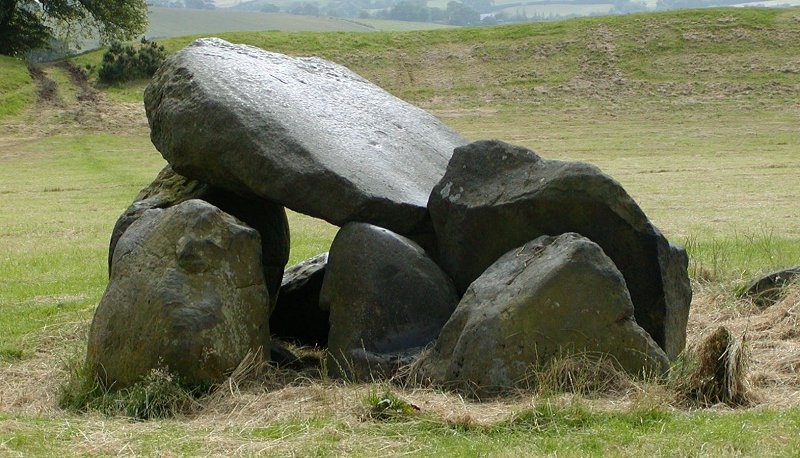
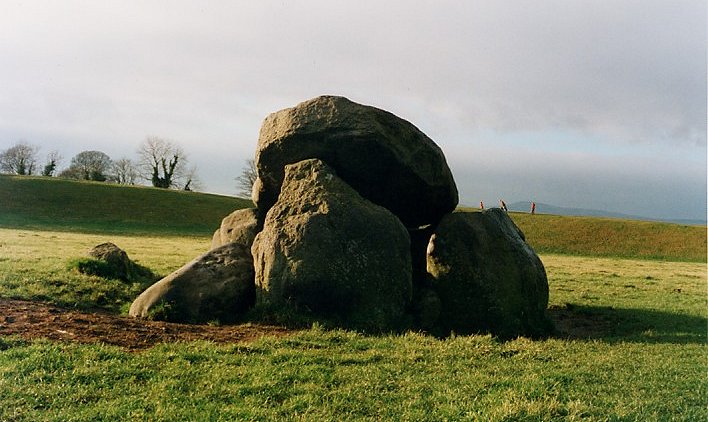
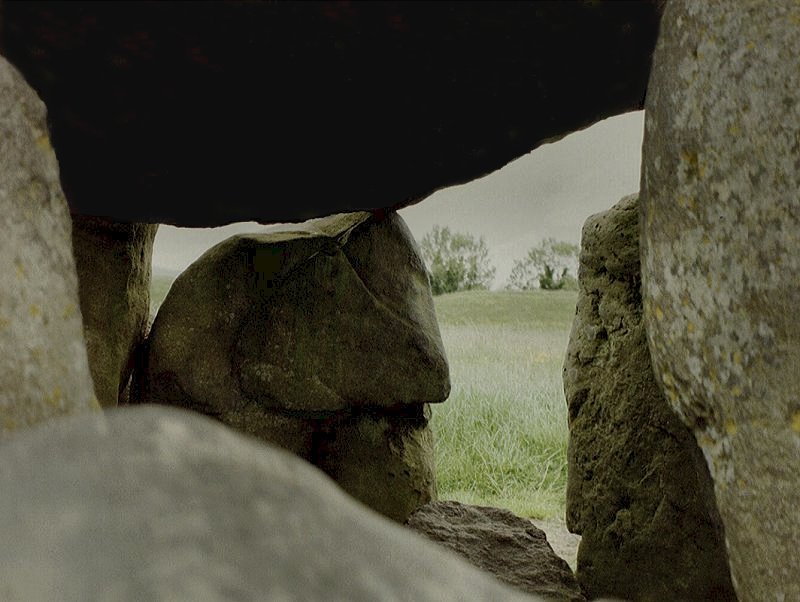
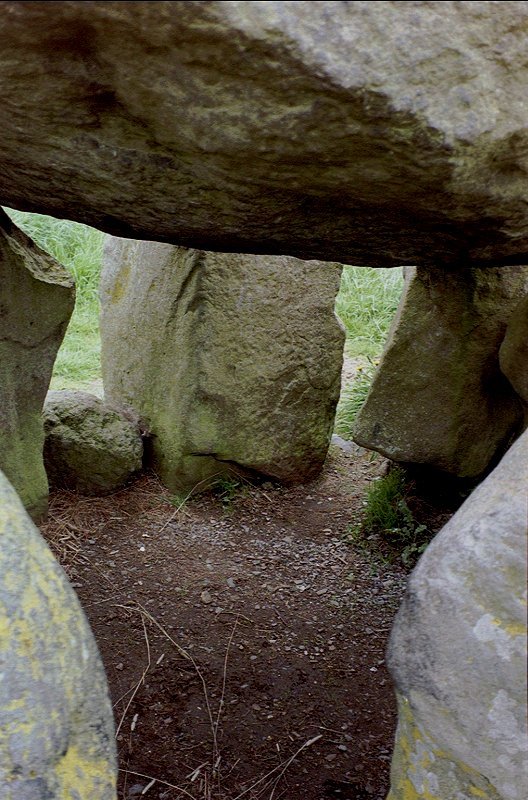
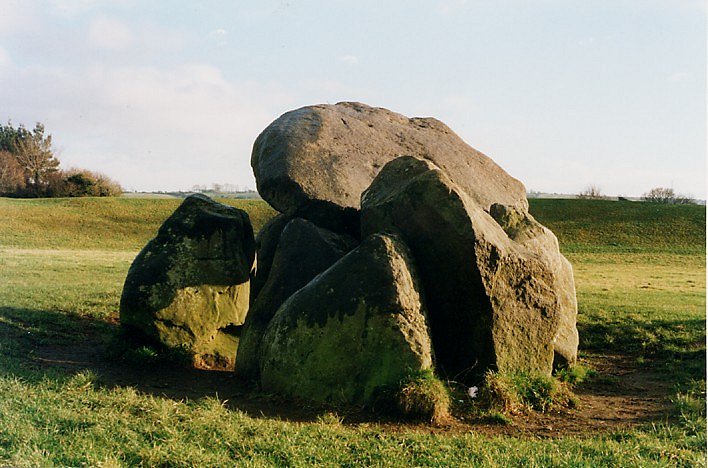
A view from the N side showing the entrance (on the right)
and the vestigial passage of the tomb.
The capstone has slipped.
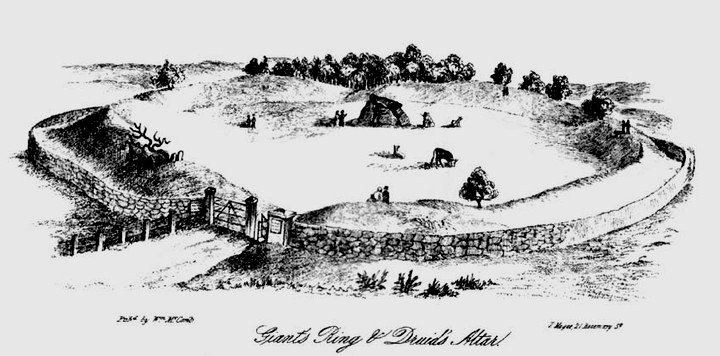
'The Giant's Ring' taken from William McComb's Guide to Belfast,
1861. Engraving by the author.
The standing-stone to the E of the henge, here photographed from the E, showing
part of the henge behind.

The standing-stone from the W.

For more pictures of the Giant's Ring see my online slide-show.
|
In the
late 19th century, reminiscences of the various archæological features
which he or his forebears had removed over the previous fifty years were
recorded from nearby farmer David Bodel. These features included a standing
stone, two flat cemeteries, a cemetery mound containing several stone
kists, several scattered kist-burials, a ritual pit containing burnt material,
a mound containing a megalithic tomb, and various carved stone artifacts.
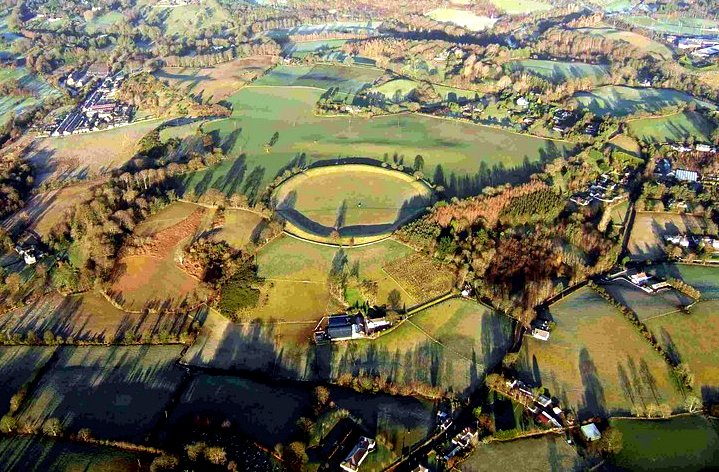
Similar sites were found in the adjoining fields of his neighbours, Messrs. Thompson, McKeown and Russell: effectively the whole area of the small plateau which still yields flint artefacts after ploughing. More recently, air photography revealed a line of three small round barrows only 75 metres to the south west, and a site known as Ballynahatty 5 has been excavated, revealing that the plateau can be compared with Stonehenge in the variety and sequence of its monuments, both wood and stone. This was a Sacred Landscape which acted as a magnet for possibly hundreds of burials and thousands of rites and ceremonies through the Late Neolithic and Early Bronze Ages. |
For an excellent account of the site and the excavations
around the site, see
http://www.lisburn.com/books/historical_society/volume9/volume9_1.html
<<
BACK<<
More and better pictures
are on the
expanded and developed from this website.